A place in the story
Makola Market
Accra's central market district is a lesson in how the capital eats, dresses, bargains and keeps moving.
Narration available · 2 min
Listen to the story
Makola Market, narrated.
Read transcript
Accra's central market district is a lesson in how the capital eats, dresses, bargains and keeps moving.
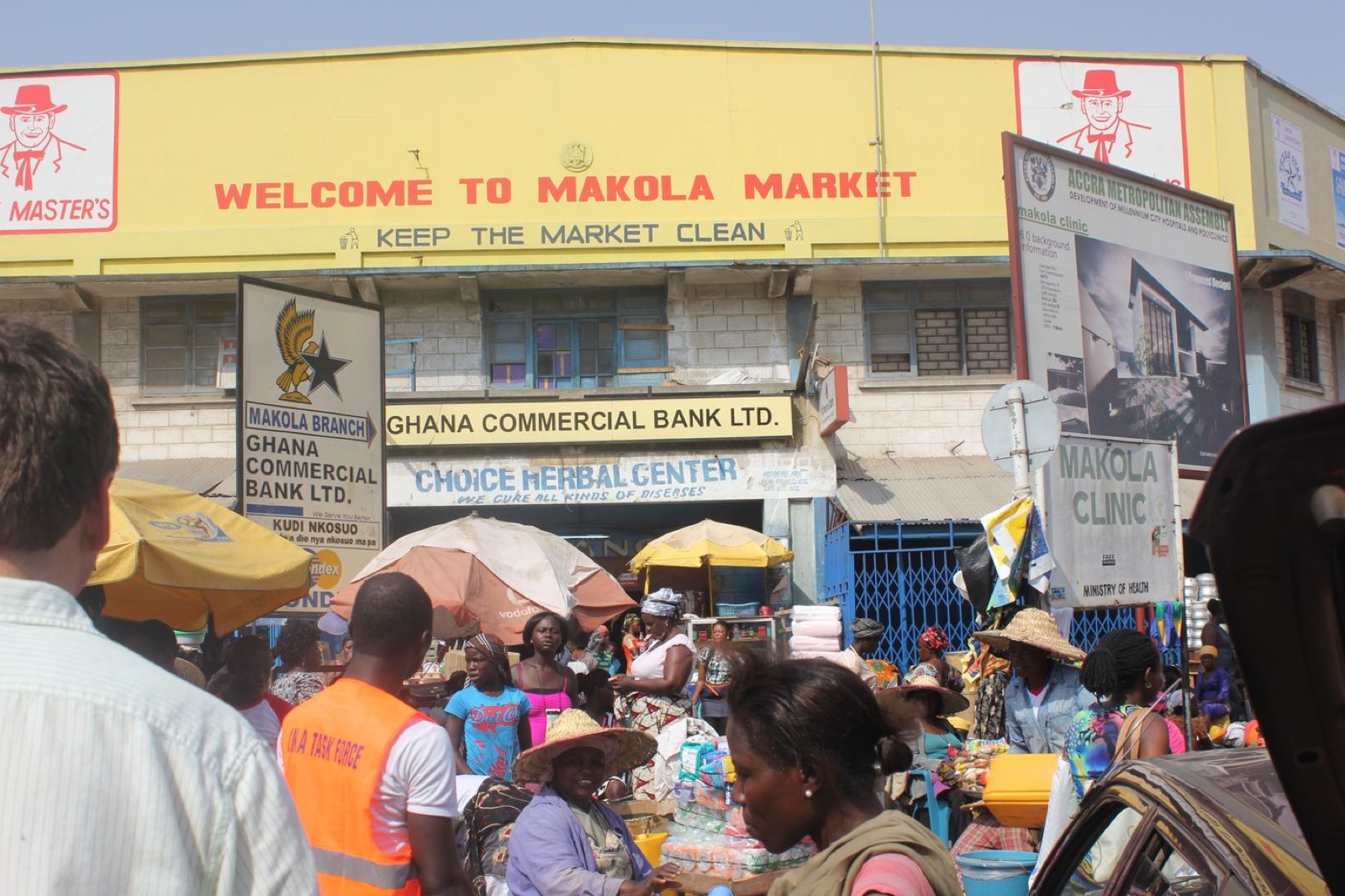
The city arrives before you do. Makola is one of the places where Accra's scale becomes physical. Traders call out, goods arrive from different regions and narrow routes carry more activity than their size seems able to hold. Textiles, food, household items and street trade overlap. The market is not an attraction added to the city. It is part of the city's operating system. To walk through it is to see how people turn supply, trust and speed into a living economy.
A market with a history. Makola's story belongs to women's trading networks, colonial Accra, urban growth and the long work of making a livelihood in public. The goods change, but the basic question remains: who has access to the centre of a growing city? A stall is a business, a social connection and a claim to space. That makes the market useful for understanding Ghana beyond monuments. National life is also negotiated through prices, transport, food and the work of traders.
Go with humility. A guide can help you navigate, but visitors should not confuse access with entitlement. Ask before taking photographs, keep valuables secure and agree prices clearly. Come in the morning or when your guide recommends, and leave room for the market's own pace. Makola teaches that an urban landmark does not need a grand facade. Sometimes the place that tells you most about a city is the one where thousands of ordinary decisions are made before lunchtime. Read this place alongside the people who maintain it. A landmark becomes useful when it changes what you notice next: the road into a town, the work around a museum, the river beyond a view, or the memory a guide chooses to explain.
Makola reveals the work, gendered networks and urban negotiations that keep Accra supplied and connected.
The city arrives before you do
Makola is one of the places where Accra's scale becomes physical. Traders call out, goods arrive from different regions and narrow routes carry more activity than their size seems able to hold. Textiles, food, household items and street trade overlap. The market is not an attraction added to the city. It is part of the city's operating system. To walk through it is to see how people turn supply, trust and speed into a living economy.
A market with a history
Makola's story belongs to women's trading networks, colonial Accra, urban growth and the long work of making a livelihood in public. The goods change, but the basic question remains: who has access to the centre of a growing city? A stall is a business, a social connection and a claim to space. That makes the market useful for understanding Ghana beyond monuments. National life is also negotiated through prices, transport, food and the work of traders.
Go with humility
A guide can help you navigate, but visitors should not confuse access with entitlement. Ask before taking photographs, keep valuables secure and agree prices clearly. Come in the morning or when your guide recommends, and leave room for the market's own pace. Makola teaches that an urban landmark does not need a grand facade. Sometimes the place that tells you most about a city is the one where thousands of ordinary decisions are made before lunchtime. Read this place alongside the people who maintain it. A landmark becomes useful when it changes what you notice next: the road into a town, the work around a museum, the river beyond a view, or the memory a guide chooses to explain.
Why this place matters
Makola reveals the work, gendered networks and urban negotiations that keep Accra supplied and connected.
Visiting with care: Use a guide if unfamiliar, keep valuables secure, ask before photographing people and agree prices before buying.
Where this is today
Makola Market
Greater Accra Region · Exact surviving site
Open modern mapSources
Read the references behind this story.
Image credit: Benggriff via Wikimedia Commons · Image source
 Continue to National Museum of GhanaNational Museum of GhanaAn Accra museum where archaeology, ethnography and art bring many Ghanaian histories into one public conversation.