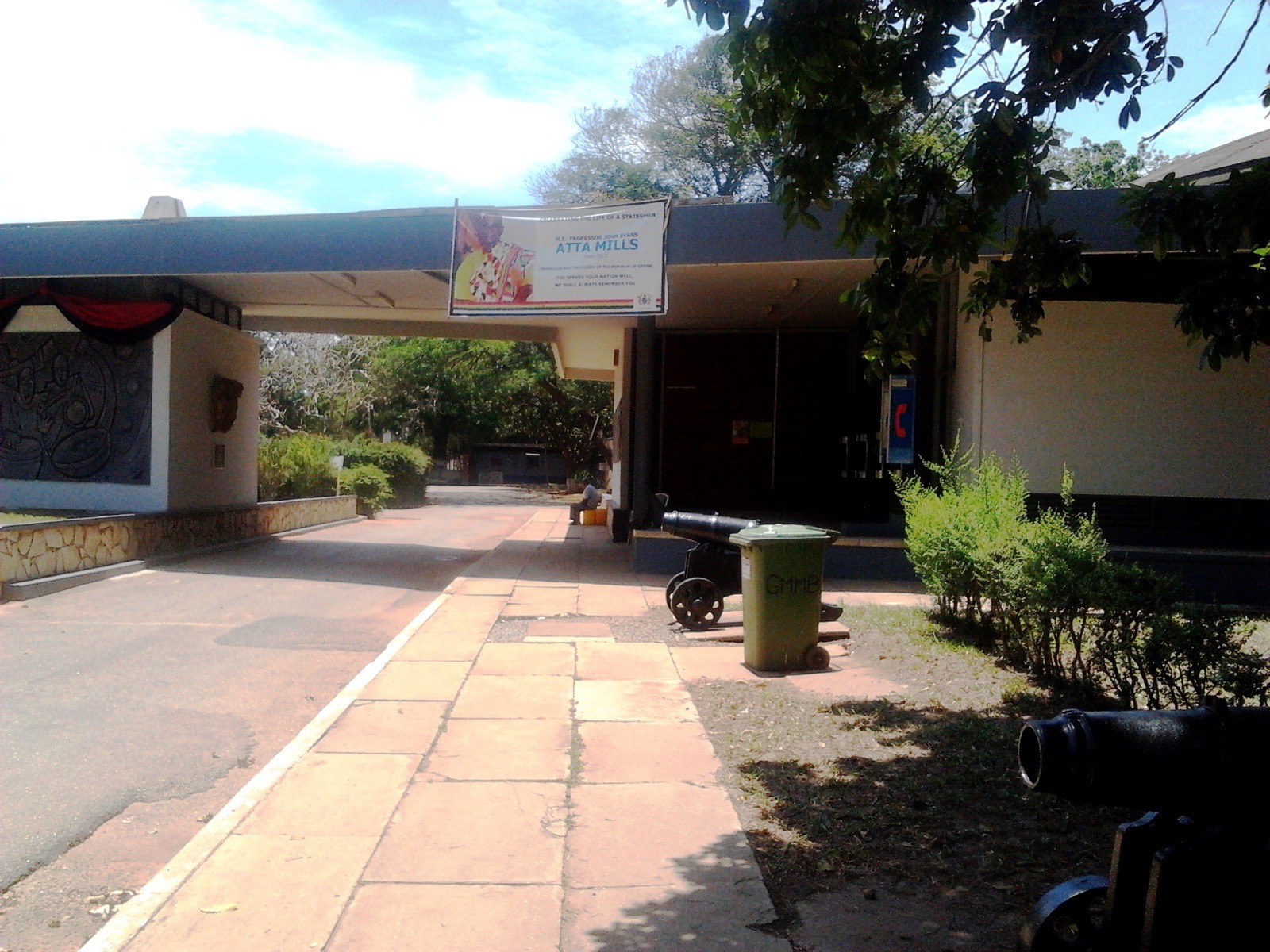
A place in the story
National Museum of Ghana
An Accra museum where archaeology, ethnography and art bring many Ghanaian histories into one public conversation.
Narration available · 2 min
Listen to the story
National Museum of Ghana, narrated.
Read transcript
An Accra museum where archaeology, ethnography and art bring many Ghanaian histories into one public conversation.
A museum of many Ghanas. A national museum has a difficult job. Ghana is not one story told from one place. Its peoples, languages, states, religions, crafts and political histories developed across different environments and time periods. The National Museum of Ghana brings objects from those worlds into a shared public setting. That arrangement can create connection, but it also asks visitors to look at labels carefully and notice whose history is being centred, grouped or left apart.
Objects as evidence. Tools, textiles, regalia, sculptures and archaeological materials help make the past visible. An object can show how people worked, governed, worshipped, traded or represented authority, but it cannot answer every question by itself. Museum interpretation becomes part of the evidence. Visitors can compare material objects with oral tradition, written sources and the historical places where those objects belonged. The result is not a perfect picture. It is a richer way to ask what survives and why.
A public classroom. The National Museum works like a public classroom for Ghanaian history and culture. It gives a first-time visitor an overview before they travel to a castle, palace, shrine or memorial. It also provides context for diaspora visitors who want to understand the objects and institutions behind familiar symbols. The museum's value is not that it settles every historical argument. It gives visitors enough material to keep asking better questions after they leave. It can turn a quick visit into a map for the rest of a Ghana journey, linking objects to people, places and the choices that shaped them. That is the point of a national collection.
The museum gives Ghana's diverse histories a shared public setting without requiring them to become one simple story.
A museum of many Ghanas
A national museum has a difficult job. Ghana is not one story told from one place. Its peoples, languages, states, religions, crafts and political histories developed across different environments and time periods. The National Museum of Ghana brings objects from those worlds into a shared public setting. That arrangement can create connection, but it also asks visitors to look at labels carefully and notice whose history is being centred, grouped or left apart.
Objects as evidence
Tools, textiles, regalia, sculptures and archaeological materials help make the past visible. An object can show how people worked, governed, worshipped, traded or represented authority, but it cannot answer every question by itself. Museum interpretation becomes part of the evidence. Visitors can compare material objects with oral tradition, written sources and the historical places where those objects belonged. The result is not a perfect picture. It is a richer way to ask what survives and why.
A public classroom
The National Museum works like a public classroom for Ghanaian history and culture. It gives a first-time visitor an overview before they travel to a castle, palace, shrine or memorial. It also provides context for diaspora visitors who want to understand the objects and institutions behind familiar symbols. The museum's value is not that it settles every historical argument. It gives visitors enough material to keep asking better questions after they leave. It can turn a quick visit into a map for the rest of a Ghana journey, linking objects to people, places and the choices that shaped them. That is the point of a national collection.
Why this place matters
The museum gives Ghana's diverse histories a shared public setting without requiring them to become one simple story.
Visiting with care: Check current opening arrangements before visiting because museum access and displays can change.
Where this is today
National Museum of Ghana
Greater Accra Region · Exact surviving site
Open modern mapSources
Read the references behind this story.
Image credit: Livinba via Wikimedia Commons · Image source
 Continue to Kwame Nkrumah Memorial ParkKwame Nkrumah Memorial ParkThe present memorial park occupies the Old Polo Grounds associated with Ghana's independence declaration.