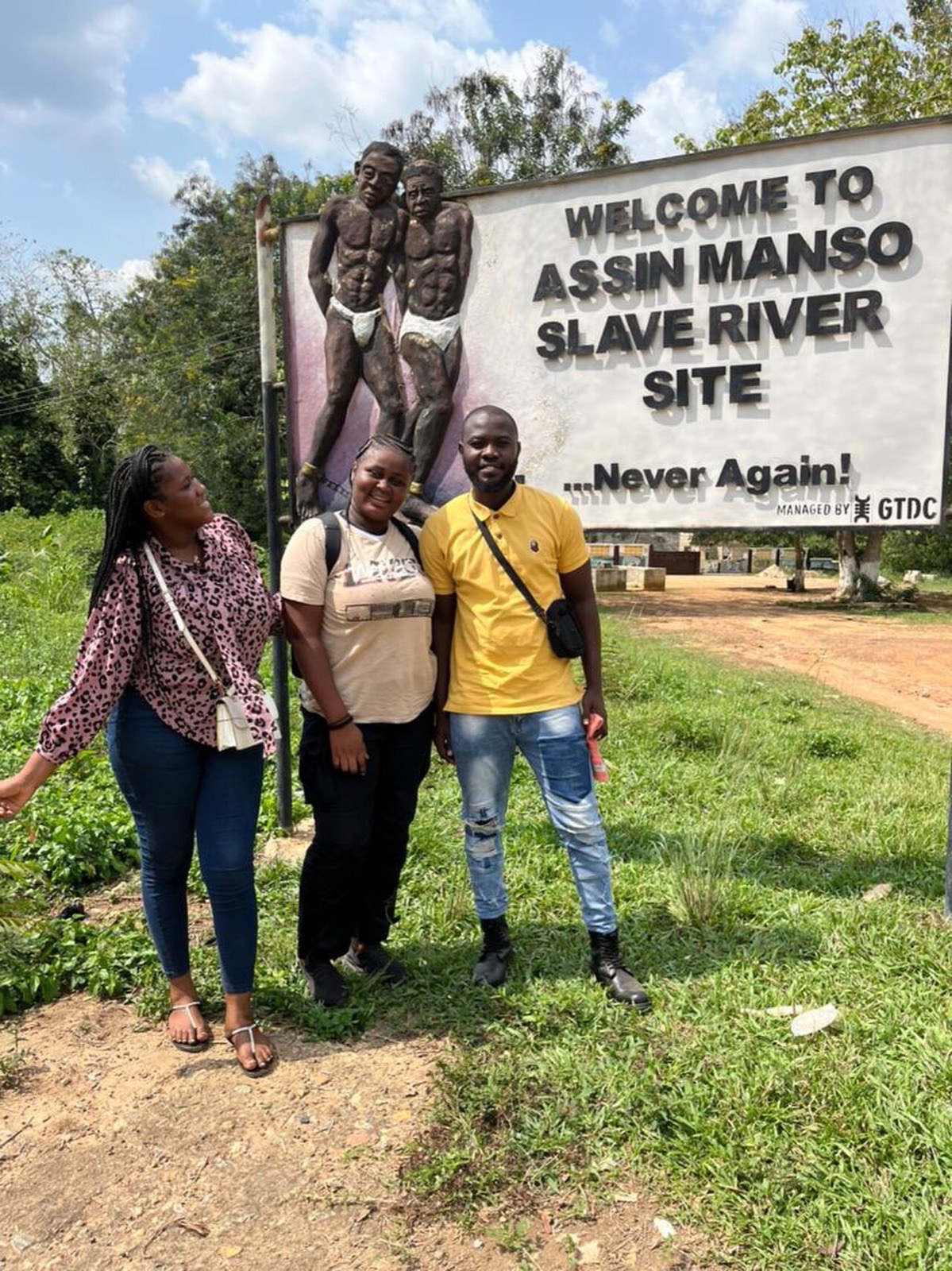
A place in the story
Assin Manso Slave River
A memorial landscape where Ghana's history of enslavement is connected to remembrance, return and the wider Atlantic story.
Narration available · 2 min
Listen to the story
Assin Manso Slave River, narrated.
Read transcript
A memorial landscape where Ghana's history of enslavement is connected to remembrance, return and the wider Atlantic story.
A place before the memorial. Assin Manso sits within the inland routes that connected communities, markets and the coast. The river and surrounding landscape were part of local life before the site became associated with the memory of the Atlantic slave trade. That sequence matters. Enslavement did not happen in a blank space. It entered existing societies and relationships, then redirected people, labour and wealth through violence toward the coast and across the ocean.
The final bath memory. The site is widely associated with the final bath tradition, a remembrance that captives were taken to the river before being moved towards the coast. The exact details of individual journeys cannot be reconstructed from one story alone, so the tradition should be presented with care rather than as a complete itinerary for every captive. Its power lies in the way a landscape gives form to memory. Water, movement and separation become part of how communities remember lives taken away.
Return and remembrance. Assin Manso is now visited as a memorial and heritage site. It can be read alongside Cape Coast Castle, Elmina Castle and diaspora journeys that ask what return means after forced displacement. The place does not offer a simple ending to the history of enslavement. It creates a point for mourning, teaching and reconnecting. Visitors should allow the site to remain human, with names, families and futures behind the historical system. Its importance is not measured by how quickly a visitor moves through it. Memory needs time, careful language and room for people to respond differently. The river holds a local place within a global history.
Assin Manso turns a difficult historical system into a place where memory, return and human lives can be considered together.
A place before the memorial
Assin Manso sits within the inland routes that connected communities, markets and the coast. The river and surrounding landscape were part of local life before the site became associated with the memory of the Atlantic slave trade. That sequence matters. Enslavement did not happen in a blank space. It entered existing societies and relationships, then redirected people, labour and wealth through violence toward the coast and across the ocean.
The final bath memory
The site is widely associated with the final bath tradition, a remembrance that captives were taken to the river before being moved towards the coast. The exact details of individual journeys cannot be reconstructed from one story alone, so the tradition should be presented with care rather than as a complete itinerary for every captive. Its power lies in the way a landscape gives form to memory. Water, movement and separation become part of how communities remember lives taken away.
Return and remembrance
Assin Manso is now visited as a memorial and heritage site. It can be read alongside Cape Coast Castle, Elmina Castle and diaspora journeys that ask what return means after forced displacement. The place does not offer a simple ending to the history of enslavement. It creates a point for mourning, teaching and reconnecting. Visitors should allow the site to remain human, with names, families and futures behind the historical system. Its importance is not measured by how quickly a visitor moves through it. Memory needs time, careful language and room for people to respond differently. The river holds a local place within a global history.
Why this place matters
Assin Manso turns a difficult historical system into a place where memory, return and human lives can be considered together.
Visiting with care: The exact historical routes and individual stories are not all recoverable; treat oral traditions and documented claims distinctly.
Where this is today
Assin Manso Slave River
Central Region · Approximate historical location
Open modern mapSources
Read the references behind this story.
Image credit: Spendilove Incoom via Wikimedia Commons · Image source
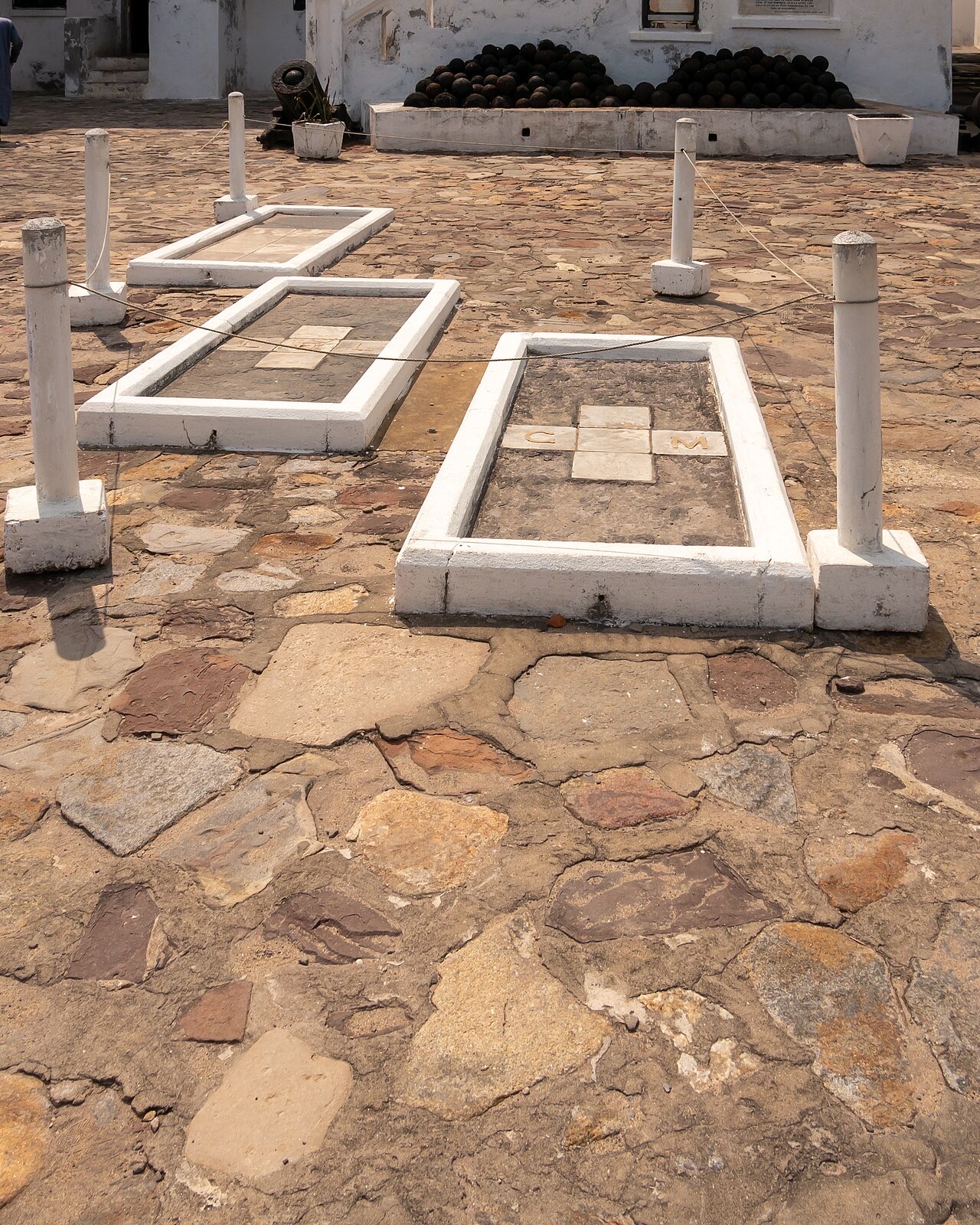 Continue to Cape Coast CastleCape Coast CastleA coastal castle that became a British headquarters and a major site of memory about the Atlantic slave trade.