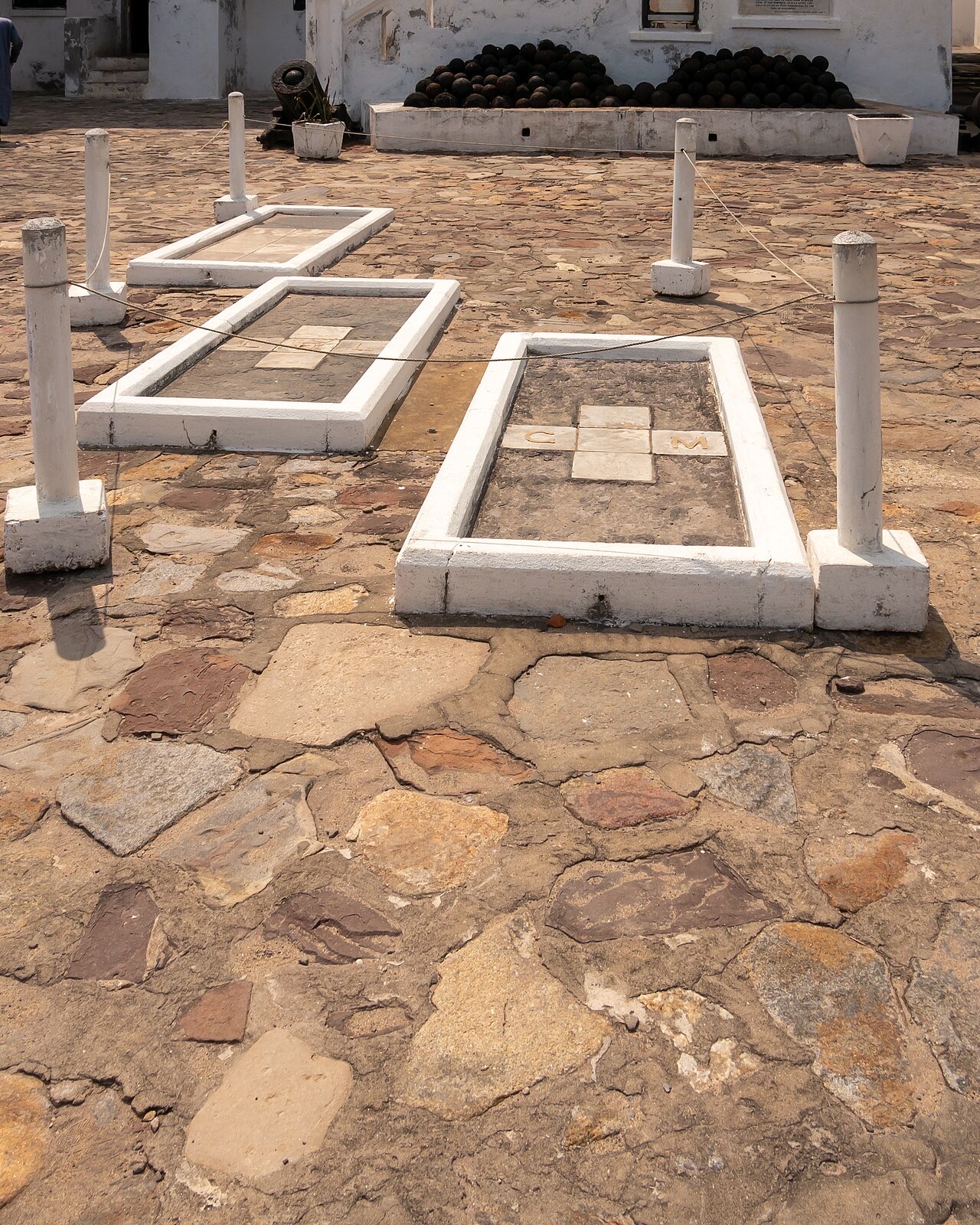
A place in the story
Cape Coast Castle
A coastal castle that became a British headquarters and a major site of memory about the Atlantic slave trade.
Narration available · 2 min
Listen to the story
Cape Coast Castle, narrated.
Read transcript
A coastal castle that became a British headquarters and a major site of memory about the Atlantic slave trade.
A coast of competition. Cape Coast was part of a busy coastal world where African authorities, merchants and European companies negotiated access to trade. The castle's history belongs to that wider competition. European powers built, expanded and transferred forts while local communities continued to farm, fish, trade and govern around them. Cape Coast later became the administrative centre of British power on the Gold Coast, but that later role should not hide the African political and commercial world that made the coast valuable in the first place.
The castle and the trade. As Atlantic plantation economies expanded, the castle became connected to the confinement and forced shipment of enslaved people. Rooms below the main structures hold a history that cannot be reduced to architecture. Captives arrived through violent systems of raiding, warfare, debt and coercion, while African actors faced unequal choices and consequences. The building's walls, records and surviving spaces help historians trace a system that joined inland capture, coastal commerce, shipping and plantation labour across the Atlantic.
A place of memory. Cape Coast Castle is now a museum and a major heritage destination. Its meaning reaches beyond the site itself because visitors connect the castle to family histories, the wider African diaspora and the question of how difficult pasts should be taught. UNESCO includes the castle within Ghana's forts and castles heritage property. A visit is strongest when it leaves room for silence, evidence and the lives behind the numbers. The castle is a starting point for understanding a region, not the whole story of the Fante coast. The surrounding town remains part of that living story.
Cape Coast Castle makes the relationship between coastal power, Atlantic commerce and historical memory impossible to ignore.
A coast of competition
Cape Coast was part of a busy coastal world where African authorities, merchants and European companies negotiated access to trade. The castle's history belongs to that wider competition. European powers built, expanded and transferred forts while local communities continued to farm, fish, trade and govern around them. Cape Coast later became the administrative centre of British power on the Gold Coast, but that later role should not hide the African political and commercial world that made the coast valuable in the first place.
The castle and the trade
As Atlantic plantation economies expanded, the castle became connected to the confinement and forced shipment of enslaved people. Rooms below the main structures hold a history that cannot be reduced to architecture. Captives arrived through violent systems of raiding, warfare, debt and coercion, while African actors faced unequal choices and consequences. The building's walls, records and surviving spaces help historians trace a system that joined inland capture, coastal commerce, shipping and plantation labour across the Atlantic.
A place of memory
Cape Coast Castle is now a museum and a major heritage destination. Its meaning reaches beyond the site itself because visitors connect the castle to family histories, the wider African diaspora and the question of how difficult pasts should be taught. UNESCO includes the castle within Ghana's forts and castles heritage property. A visit is strongest when it leaves room for silence, evidence and the lives behind the numbers. The castle is a starting point for understanding a region, not the whole story of the Fante coast. The surrounding town remains part of that living story.
Why this place matters
Cape Coast Castle makes the relationship between coastal power, Atlantic commerce and historical memory impossible to ignore.
Visiting with care: Plan enough time for a guided visit and approach the site as a place of solemn heritage.
Where this is today
Cape Coast Castle
Central Region · Exact surviving site
Open modern mapSources
Read the references behind this story.
Image credit: Matti Blume via Wikimedia Commons · Image source
 Continue to Elmina CastleElmina CastleA fortified gold-trading centre whose changing uses became part of Atlantic slavery and its memory.