A place in the story
Tafi Abuife Kente Village
A Volta Region weaving community where Ewe kente becomes a lesson in skill, identity, time and value.
Narration available · 2 min
Listen to the story
Tafi Abuife Kente Village, narrated.
Read transcript
A Volta Region weaving community where Ewe kente becomes a lesson in skill, identity, time and value.
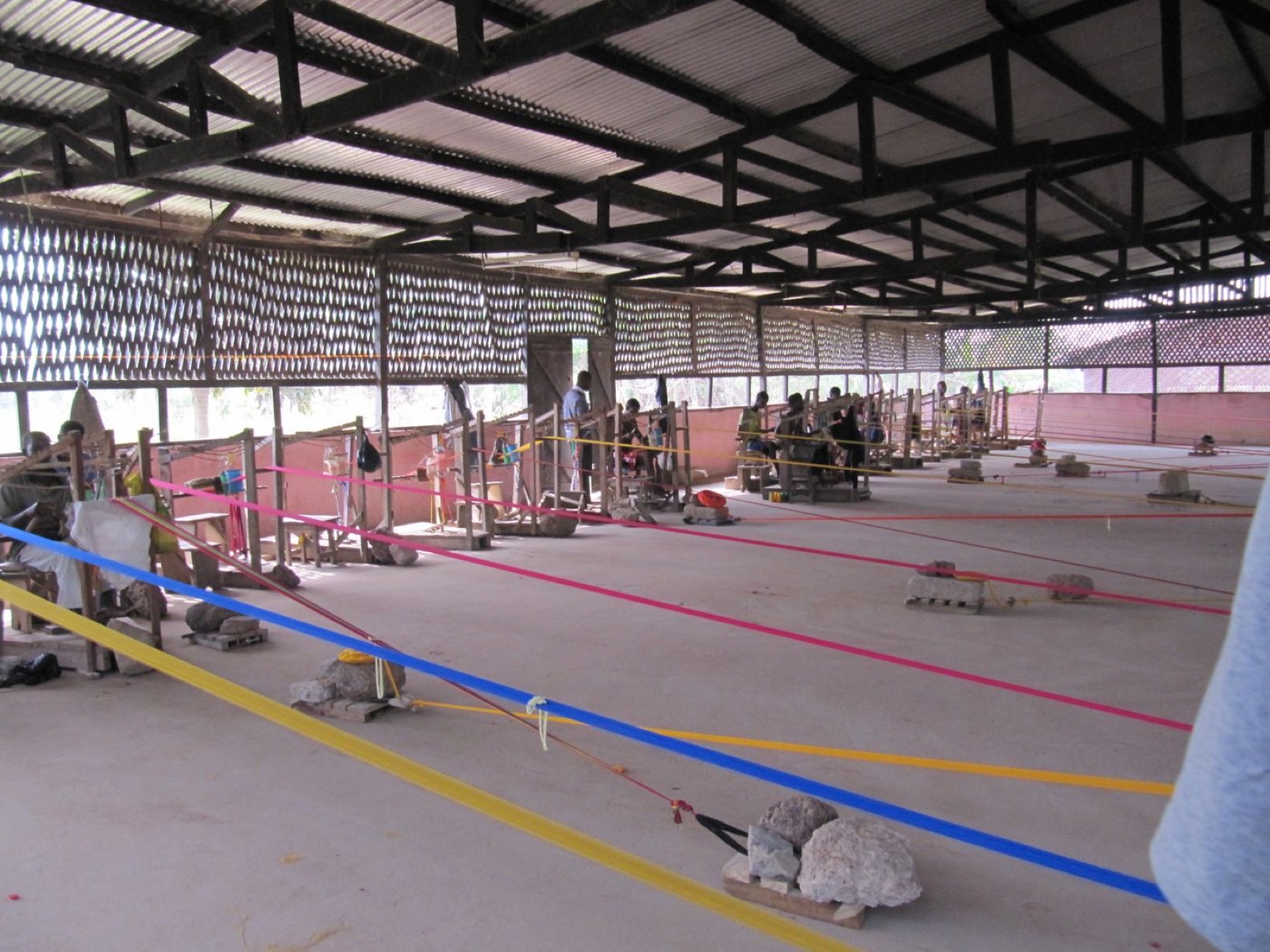
The cloth starts with a loom. At Tafi Abuife, kente is not just a finished pattern on a shelf. Visitors can see the concentration behind the cloth: threads prepared, a loom arranged, hands repeating precise movements and a design taking shape line by line. Ewe weaving carries local histories and identities that should not be flattened into a single national label. The village offers a way to meet the craft where it is made, among people whose knowledge gives it meaning.
A pattern can carry a message. Kente designs are often discussed as if each pattern has one universal translation, but meanings depend on community, maker, occasion and interpretation. That complexity is part of the craft's value. The cloth belongs to a world of ceremonies, status, memory and trade, while modern buyers also want it as fashion and souvenir. The tension between cultural meaning and commercial demand raises a practical question: how can visitors support the maker rather than only the image?
Buy the story responsibly. Ask artisans to explain the process, pay fairly and buy directly when possible. Do not rush a demonstration or photograph people without asking. Tafi Abuife is worth more than a quick stop because it shows how a material tradition survives through work and adaptation. The village connects Ghana's cultural identity to the hands that produce it. If the cloth travels home with you, let its price and its story acknowledge the time, skill and community behind it. Read this place alongside the people who maintain it. A landmark becomes useful when it changes what you notice next: the road into a town, the work around a museum, the river beyond a view, or the memory a guide chooses to explain.
Tafi Abuife shows Ewe kente as living work shaped by technique, identity, ceremony and the economics of craft.
The cloth starts with a loom
At Tafi Abuife, kente is not just a finished pattern on a shelf. Visitors can see the concentration behind the cloth: threads prepared, a loom arranged, hands repeating precise movements and a design taking shape line by line. Ewe weaving carries local histories and identities that should not be flattened into a single national label. The village offers a way to meet the craft where it is made, among people whose knowledge gives it meaning.
A pattern can carry a message
Kente designs are often discussed as if each pattern has one universal translation, but meanings depend on community, maker, occasion and interpretation. That complexity is part of the craft's value. The cloth belongs to a world of ceremonies, status, memory and trade, while modern buyers also want it as fashion and souvenir. The tension between cultural meaning and commercial demand raises a practical question: how can visitors support the maker rather than only the image?
Buy the story responsibly
Ask artisans to explain the process, pay fairly and buy directly when possible. Do not rush a demonstration or photograph people without asking. Tafi Abuife is worth more than a quick stop because it shows how a material tradition survives through work and adaptation. The village connects Ghana's cultural identity to the hands that produce it. If the cloth travels home with you, let its price and its story acknowledge the time, skill and community behind it. Read this place alongside the people who maintain it. A landmark becomes useful when it changes what you notice next: the road into a town, the work around a museum, the river beyond a view, or the memory a guide chooses to explain.
Why this place matters
Tafi Abuife shows Ewe kente as living work shaped by technique, identity, ceremony and the economics of craft.
Visiting with care: Ask before photographing, buy fairly and allow time for artisans to demonstrate rather than treating the village as a shopfront.
Where this is today
Tafi Abuife Kente Village
Volta Region · Exact surviving site
Open modern mapSources
Read the references behind this story.
Image credit: Abbeyfamily via Wikimedia Commons · Image source
 Continue to Nubuke FoundationNubuke FoundationAn East Legon arts foundation where exhibitions and programmes show Ghanaian culture as living work rather than a finished archive.