A place in the story
Paga Crocodile Pond
A sacred pond near Ghana's northern border where local belief, community protection and wildlife tourism meet.
Narration available · 2 min
Listen to the story
Paga Crocodile Pond, narrated.
Read transcript
A sacred pond near Ghana's northern border where local belief, community protection and wildlife tourism meet.
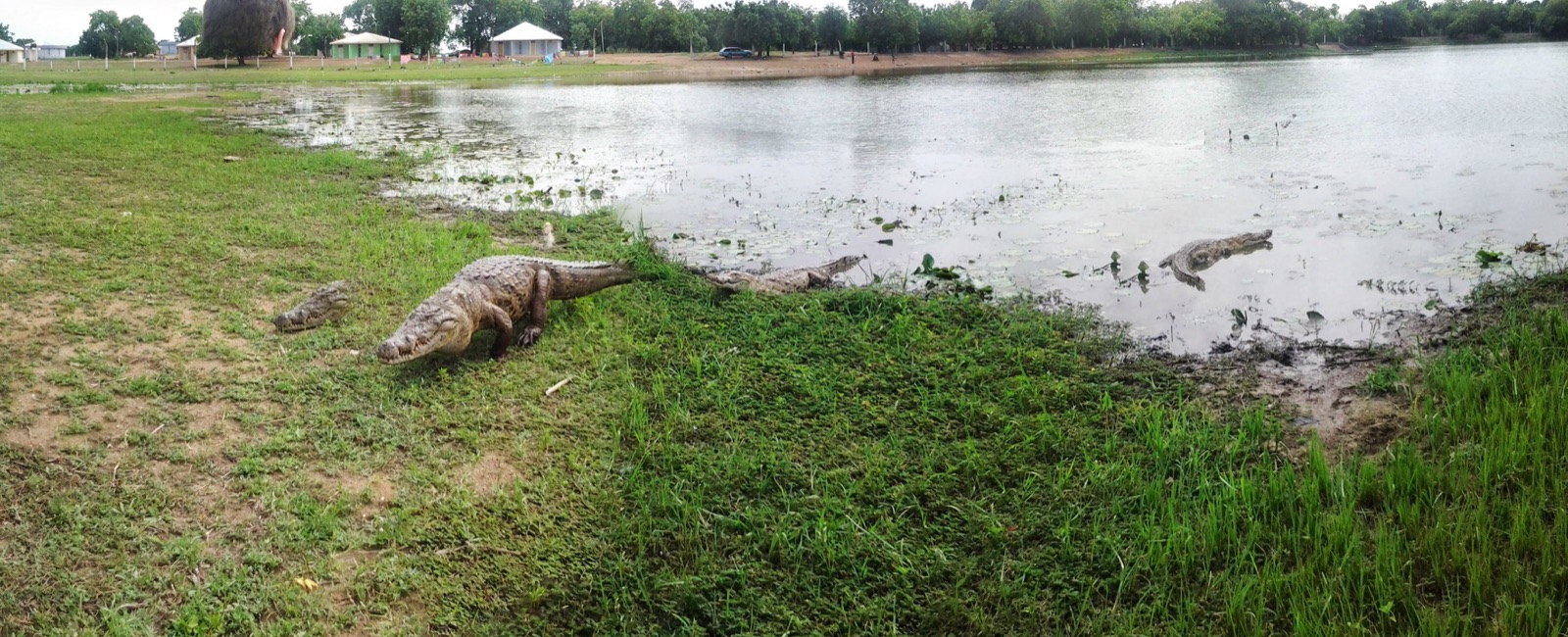
A pond with a different relationship to wildlife. At Paga, crocodiles are not presented simply as animals to be watched from behind a barrier. The pond is part of local belief and community life, which changes how a visitor should understand the encounter. The animals are protected through a relationship that predates the tourism stop. That does not make the pond risk-free or the story simple. It makes local guidance essential from the moment you arrive.
The borderland context. Paga sits near Burkina Faso, in a region shaped by movement across the northern frontier. Visitors often pair the pond with nearby heritage sites, but the area deserves more than a quick collection of attractions. Trade, family ties, faith and travel have long crossed these landscapes. The crocodile pond becomes one point where nature and culture are visible together. Its meaning comes from the community that protects it, not from a claim that every local story can be reduced to one explanation.
Respect is part of the visit. Follow the guide's instructions closely and never approach the water independently. Ask before photographing people, listen to the local account and do not turn a sacred site into a stunt. Paga can teach a visitor that conservation is sometimes built through belief and responsibility rather than fences alone. The lesson travels beyond the pond: wildlife survives when communities have reasons, rights and resources to protect it. That is the story worth carrying south. Read this place alongside the people who maintain it. A landmark becomes useful when it changes what you notice next: the road into a town, the work around a museum, the river beyond a view, or the memory a guide chooses to explain.
Paga shows how community belief can shape wildlife protection and tourism in Ghana's northern borderlands.
A pond with a different relationship to wildlife
At Paga, crocodiles are not presented simply as animals to be watched from behind a barrier. The pond is part of local belief and community life, which changes how a visitor should understand the encounter. The animals are protected through a relationship that predates the tourism stop. That does not make the pond risk-free or the story simple. It makes local guidance essential from the moment you arrive.
The borderland context
Paga sits near Burkina Faso, in a region shaped by movement across the northern frontier. Visitors often pair the pond with nearby heritage sites, but the area deserves more than a quick collection of attractions. Trade, family ties, faith and travel have long crossed these landscapes. The crocodile pond becomes one point where nature and culture are visible together. Its meaning comes from the community that protects it, not from a claim that every local story can be reduced to one explanation.
Respect is part of the visit
Follow the guide's instructions closely and never approach the water independently. Ask before photographing people, listen to the local account and do not turn a sacred site into a stunt. Paga can teach a visitor that conservation is sometimes built through belief and responsibility rather than fences alone. The lesson travels beyond the pond: wildlife survives when communities have reasons, rights and resources to protect it. That is the story worth carrying south. Read this place alongside the people who maintain it. A landmark becomes useful when it changes what you notice next: the road into a town, the work around a museum, the river beyond a view, or the memory a guide chooses to explain.
Why this place matters
Paga shows how community belief can shape wildlife protection and tourism in Ghana's northern borderlands.
Visiting with care: Use a local guide, follow all safety instructions and treat the pond as a sacred community place.
Where this is today
Paga Crocodile Pond
Upper East Region · Exact surviving site
Open modern mapSources
Read the references behind this story.
Image credit: Dieu-Donné Gameli via Wikimedia Commons · Image source
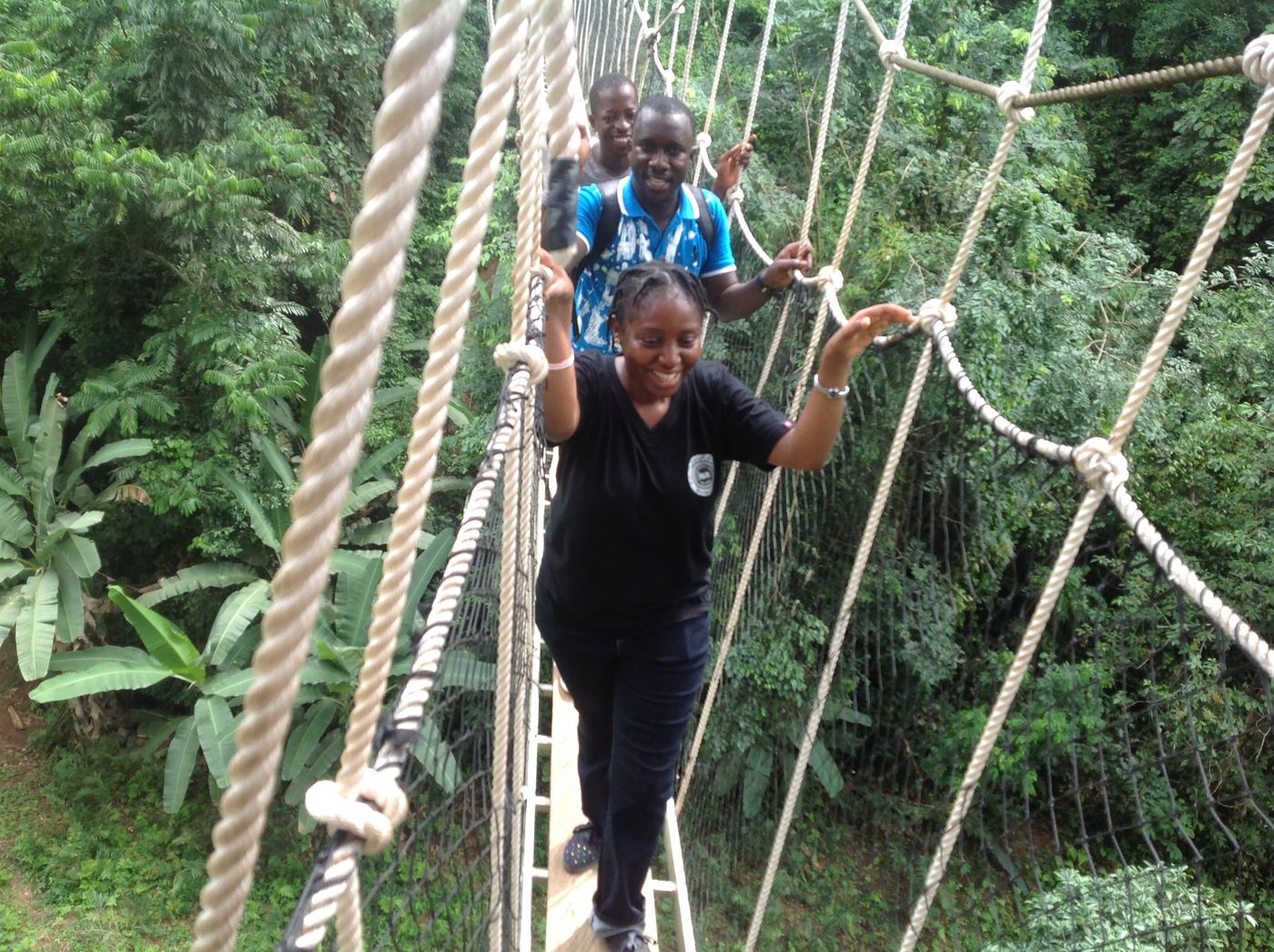 Continue to Bunso Eco ParkBunso Eco ParkA forest stop on the Accra to Kumasi route where canopy walks and plant life turn a break in the journey into a lesson.