A place in the story
Fort San Sebastian
A Shama fort that places the western fishing coast inside Ghana's wider Dutch and Atlantic history.
Narration available · 2 min
Listen to the story
Fort San Sebastian, narrated.
Read transcript
A Shama fort that places the western fishing coast inside Ghana's wider Dutch and Atlantic history.
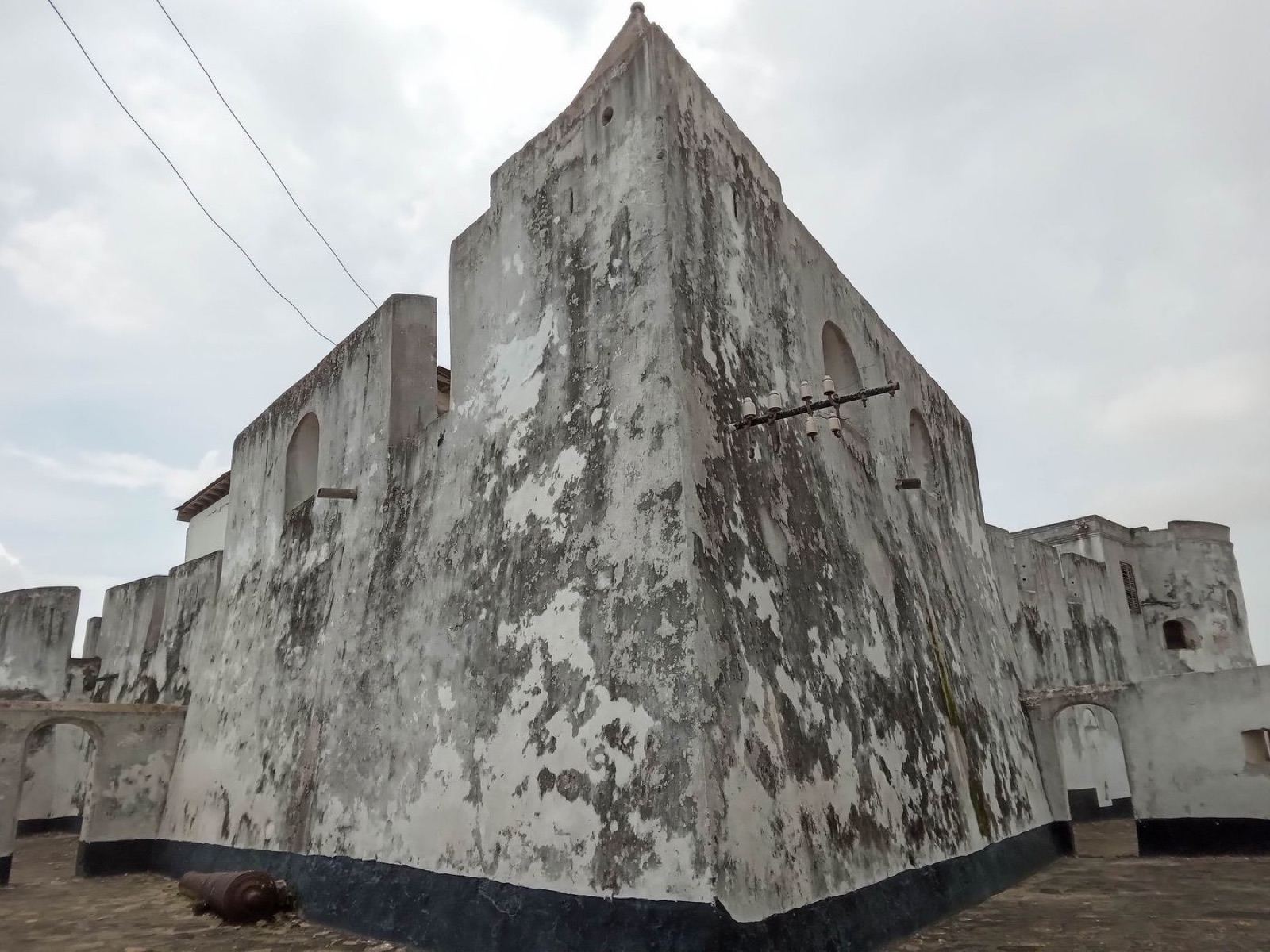
A fort beside a working town. Fort San Sebastian stands at Shama, on a coast that still feels connected to fishing and local movement. The surviving structure belongs to the Dutch Gold Coast and to the competition that made forts useful to European powers. Its position is important because the history is not sealed inside the walls. Boats, markets and everyday work continue around the site, making the relationship between heritage and present life impossible to miss.
The coast was a network. San Sebastian was part of a chain of forts that linked trade, military rivalry and Atlantic shipping. Gold and other goods moved through these routes, while the expansion of plantation economies intensified the forced movement of Africans. A smaller fort can therefore open a large history. It shows how power depended on many outposts, negotiations and local conditions rather than on a few famous castles alone.
Stay with the town. Combine the visit with local coastal context if time allows, and use a guide where interpretation is limited. Do not rush through the fort as an abandoned object. Ask how Shama's people relate to the site now, and notice the fishing landscape beyond the walls. Fort San Sebastian helps correct a common mistake: treating history as something that ended when the colonial flag changed. The building survives, but the town continues to decide what its survival means. Read this place alongside the people who maintain it. A landmark becomes useful when it changes what you notice next: the road into a town, the work around a museum, the river beyond a view, or the memory a guide chooses to explain.
Fort San Sebastian connects a living fishing town to the wider network of European competition and Atlantic commerce.
A fort beside a working town
Fort San Sebastian stands at Shama, on a coast that still feels connected to fishing and local movement. The surviving structure belongs to the Dutch Gold Coast and to the competition that made forts useful to European powers. Its position is important because the history is not sealed inside the walls. Boats, markets and everyday work continue around the site, making the relationship between heritage and present life impossible to miss.
The coast was a network
San Sebastian was part of a chain of forts that linked trade, military rivalry and Atlantic shipping. Gold and other goods moved through these routes, while the expansion of plantation economies intensified the forced movement of Africans. A smaller fort can therefore open a large history. It shows how power depended on many outposts, negotiations and local conditions rather than on a few famous castles alone.
Stay with the town
Combine the visit with local coastal context if time allows, and use a guide where interpretation is limited. Do not rush through the fort as an abandoned object. Ask how Shama's people relate to the site now, and notice the fishing landscape beyond the walls. Fort San Sebastian helps correct a common mistake: treating history as something that ended when the colonial flag changed. The building survives, but the town continues to decide what its survival means. Read this place alongside the people who maintain it. A landmark becomes useful when it changes what you notice next: the road into a town, the work around a museum, the river beyond a view, or the memory a guide chooses to explain.
Why this place matters
Fort San Sebastian connects a living fishing town to the wider network of European competition and Atlantic commerce.
Visiting with care: Check access, use local guidance and give yourself time to see the fort alongside Shama's present-day coastal life.
Where this is today
Fort San Sebastian
Western Region · Exact surviving site
Open modern mapSources
Read the references behind this story.
Image credit: Esthee2010 via Wikimedia Commons · Image source
 Continue to Pikworo Slave CampPikworo Slave CampA northern heritage site that connects inland routes, captivity and the long journey toward Ghana's southern forts.